Blog post
What is HVO, and why do our hybrids run on it?
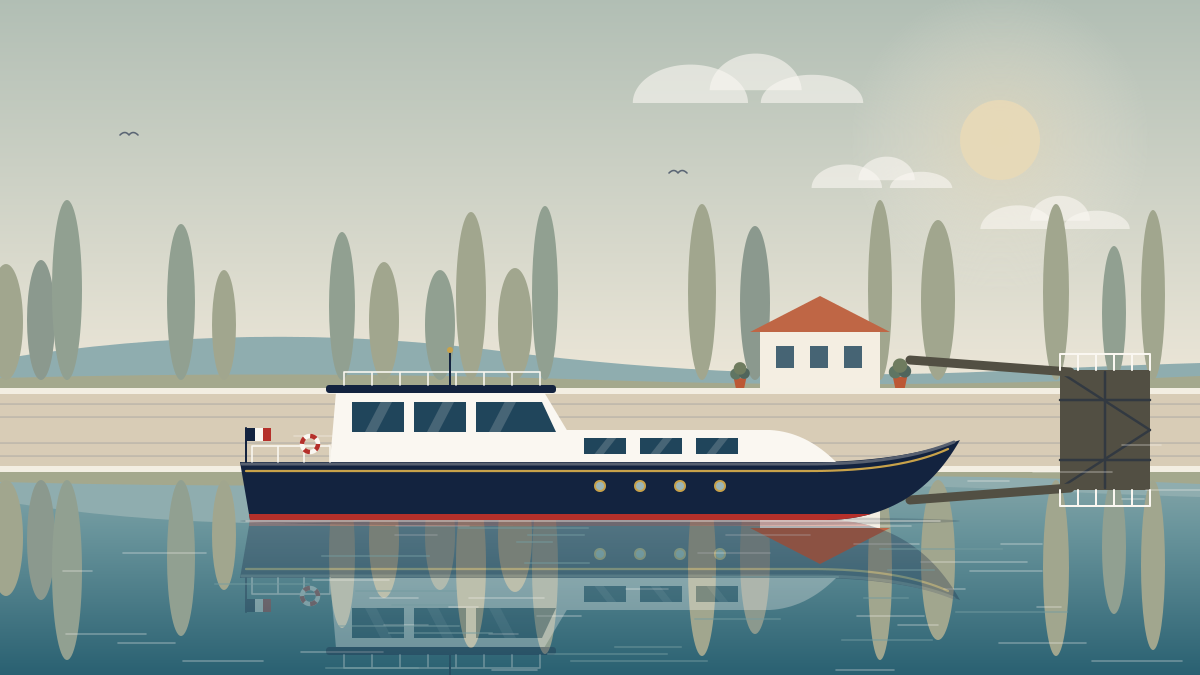
Many of our hulls are fully electric, but some of the larger boats and those that travel long distances carry an engine or generator as well. The Heron 12, the Bastion Pusher, the Salamander Fireboat and the Kingfisher 8's range extender all run on HVO. Customers often ask what that is. As the person who buys it for our yard and our test fleet, here is my answer.
HVO stands for hydrotreated vegetable oil. Despite the name, it is not cooking oil poured into a tank. It is made from waste fats and residues, such as used cooking oil from restaurants and leftovers from food processing, which are treated with hydrogen in a refinery. The result is a clear, clean fuel that behaves almost exactly like diesel. It can be used in diesel engines without modification and mixed with diesel in any proportion, which makes it very practical for boats.
The main reason we use it is emissions. Because HVO is made from waste rather than fossil oil, its lifecycle carbon emissions are much lower than diesel's. It also burns more cleanly, with less soot and fewer particles, which matters on a river running through the middle of a city. Crews tell us the engine rooms smell less, and exhaust stains on the hull are much rarer.
There are limits, and we are honest about them. HVO costs more than fossil diesel, and supply is limited. Our sourcing rules only accept HVO made from certified waste materials, never from palm oil or crops grown for fuel, so we are careful about where it comes from. This is also why the engines on our hybrids are designed to run as little as possible. On the Heron 12, with its 650 km range, the generator only starts when the battery needs a top-up. On the Bastion Pusher, the electric side handles low-speed work and the engines take over for heavy pushing.
We see HVO as a bridge. For short, predictable trips, batteries are already the best answer. For the heaviest barges, hydrogen is starting to work, as the Seine Bulk 110 shows. But for boats that need to go a long way, carry a lot of power or work in emergencies, HVO lets us cut emissions dramatically today, using boats and fuel supply chains that already exist. Fuel berths along the Seine and in Burgundy increasingly stock it, and we keep a list on our website for owners planning longer trips.