Blog post
Charging in the time it takes to board: the Pont Shuttle 24
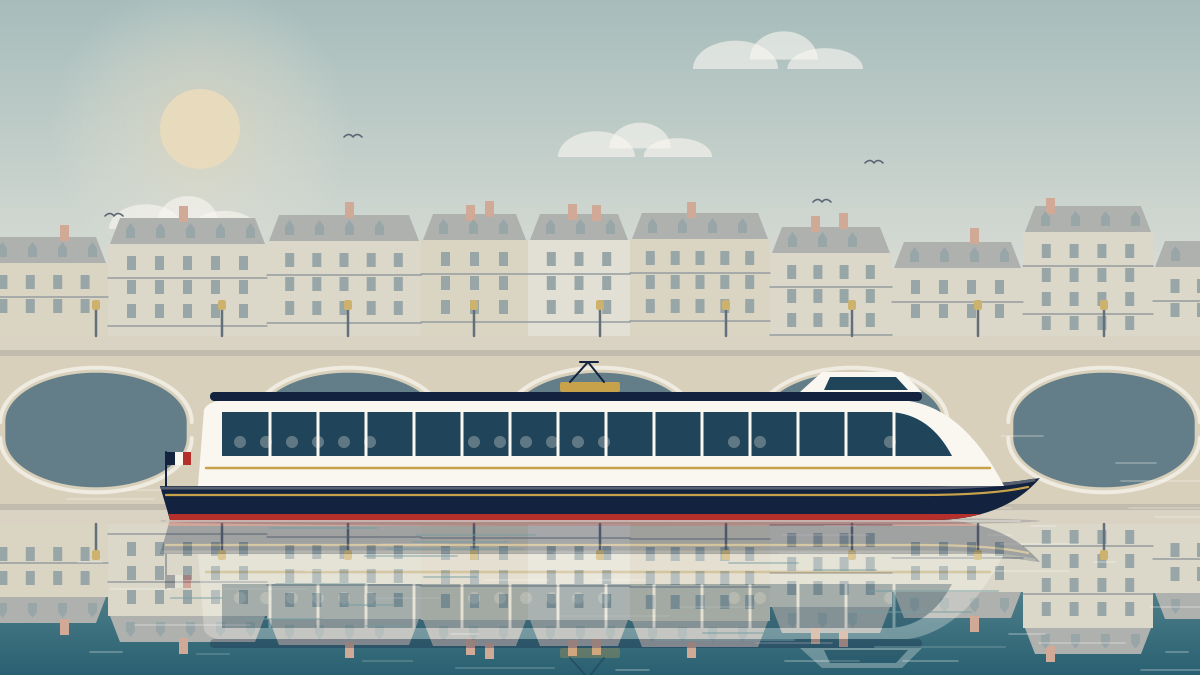
A river bus has a hard life. It runs from early morning until late at night, stopping every few minutes, and any time spent charging is time not carrying passengers. When operators first asked us for an electric river bus, the question was not whether batteries could power it, but how to keep it running all day without long breaks. Our answer for the Pont Shuttle 24 was to charge a little at every stop.
The Pont Shuttle is 24 metres long and carries up to 120 passengers at speeds of up to 20 km/h. It uses about 6.5 kWh per km and has a range of 140 km on a full battery, which in theory covers a full day. In practice, operators want margin for strong currents, cold weather and the unexpected. So at the busiest stops, such as Bercy and Javel, the quay has a charging connector that links to the boat automatically as it docks. While passengers get on and off, the battery takes on a short, powerful top-up.
My team writes the software that makes this work. The shuttle and the quay talk to each other by radio as the boat approaches. By the time the hull touches the pontoon, the charger knows the battery's state of charge, its temperature and how long the stop is likely to be. It delivers as much energy as it safely can in that window and stops the moment the skipper releases the boat. Passengers notice nothing, except perhaps a soft click as the connector engages.
The same idea powers our Crossing Ferry 20, a cable-guided ferry that shuttles back and forth across a river with up to 60 passengers. It charges at each landing, every few minutes, all day long, with a range of just 40 km because it never needs more. It is the simplest possible electric boat: short trips, predictable stops, and power always waiting at the end of each crossing.
Little and often turns out to be kind to batteries as well. Because the Pont Shuttle's battery rarely drops very low or charges completely full, it stays in the range where cells age most slowly. After three years in service, the first shuttles still have almost all of their original capacity. The lesson we took from this project applies well beyond river buses: when you design the boat and the quay together, you can do far more with less battery.