Blog post
From dawn drills to a night call: a day on the Salamander Fireboat
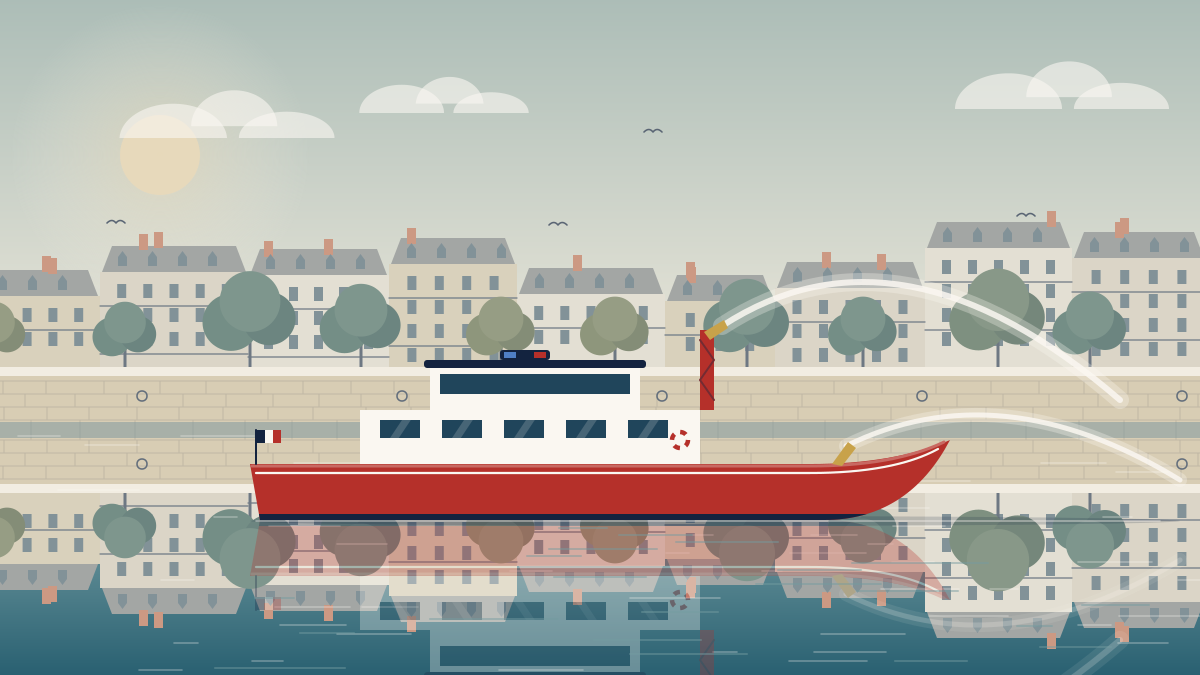
The Salamander Fireboat is the hull I am proudest of in our whole range, and also the one I hope people never need. Last spring I joined one of the crews who operate it on the Seine for a full shift, from the morning briefing to a call after dark. I wanted to see how our design choices hold up in real work, and I came away with a notebook full of ideas and a great deal of respect.
The day starts at seven with checks. The Salamander is 19 metres long, runs with two skippers and a crew of six, and can carry up to 12 rescued people. The crew test the fire pumps, the monitors on the roof, the medical kit and the rescue platform at the stern. They run the diesel-electric hybrid system through its modes: silent electric for patrols, full power for a sprint. Top speed is 35 km/h, and the range of 160 km means a single crew can cover the whole of the city's river without refuelling during a shift.
Mid-morning was training. The crew practised recovering a casualty from the water using the hydraulic platform, which lowers to the waterline so nobody has to be hauled over a rail. Then they rehearsed a fire on a moored boat near Javel, approaching from upwind, setting up a water curtain and boarding over the bow. They worked alongside a Lifeline RIB 9, our 60 km/h rescue boat, which reaches casualties fast while the Salamander follows with pumps, medical space and room for more people.
The afternoon was quiet, which the crew say is the best kind of afternoon. They patrolled the centre, chatted with tour boat skippers and checked a report of a drifting pontoon. I used the time to watch how they move around the boat. Two things stood out: they wanted more handholds near the stern, and the radio controls on the flybridge were awkward with wet gloves. Both are now on the change list for the next hulls.
The call came just after nine in the evening: a man in the water near a bridge. The Lifeline was there in minutes and the Salamander arrived soon after. The casualty was brought aboard on the platform, wrapped, warmed and handed to an ambulance at the nearest quay. It was over in less than half an hour. Everyone went back to the base, wrote the report and cleaned the boat. For them it was a normal day. For me it was a reminder of why the safety team argues over every handhold and every valve.